Two styles, two sensibilities: the expressive power of the Baroque and the playful sophistication of the Rococo
Between the 17th and 18th centuries, Europe underwent an intense cultural, political, and spiritual transformation. Within this context emerged two artistic styles that profoundly shaped the history of art: the Baroque and, later, the Rococo. Although different in essence, both reflect art’s desire to connect with the viewer—whether through emotional force or decorative grace.
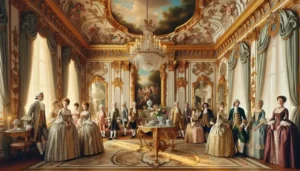
🎭 Baroque: Drama, Light, and Movement
Historical and Spiritual Context
The Baroque emerged in Europe at the end of the 16th century and flourished throughout the 17th century, alongside the Catholic Counter-Reformation and the strengthening of absolute monarchies. In a time marked by religious conflict, political tension, and an increasing theatricalization of power, Baroque art became a tool of emotional persuasion for both the Church and the State.
Main Characteristics
Baroque art sought to impact, move, and astonish. It moved away from the rational balance of the Renaissance to embrace tension, dynamism, and expressiveness:
-
Intense contrasts of light and shadow (chiaroscuro and tenebrism).
-
Dynamic compositions with strong diagonals and theatrical scenes.
-
Emphasis on emotion: expressive faces, exaggerated gestures, and dramatic detail.
-
Detailed realism: bodies, fabrics, objects, and landscapes rendered with heightened precision and sensuality.
-
Religious, mythological, and portrait themes with strong spiritual or psychological depth.
Great Masters of the Baroque
🎨 Caravaggio (Italy)
A pioneer of tenebrism, he revolutionized painting through his radical use of chiaroscuro and his realistic, human approach to religious subjects.
Notable works: The Calling of Saint Matthew, The Death of the Virgin, Judith Beheading Holofernes.
🎨 Peter Paul Rubens (Flanders)
A master of movement and Baroque sensuality, his works are filled with energy, color, and exuberance.
Key works: The Rape of the Daughters of Leucippus, The Three Graces, The Adoration of the Magi.
🎨 Diego Velázquez (Spain)
Court painter to Philip IV, he elevated realism to new heights and explored the psychological complexity of portraiture.
Masterpieces: Las Meninas, The Surrender of Breda, The Triumph of Bacchus.
🎨 Rembrandt van Rijn (Netherlands)
A genius of portraiture and emotional light, his work combines spiritual introspection, technical mastery, and deep humanity.
Key works: The Night Watch, The Return of the Prodigal Son, his many self-portraits.
💐 Rococo: Elegance, Grace, and Ornament
The Art of Pleasure and Intimacy
The Rococo emerged in France in the early 18th century as a refined and playful evolution of the Baroque. It reflects the tastes of the aristocracy during the final phase of the Ancien Régime—a sophisticated, sensual, and highly decorative world.
While the Baroque sought emotional intensity and impact, the Rococo pursued delicacy, lightness, and escapism. It was the art of aristocratic pleasure before the profound social changes brought about by the Enlightenment and the French Revolution.
Characteristics of Rococo
-
Soft, pastel color palettes dominated by pinks, golds, blues, and whites.
-
Gallant and amorous themes, idyllic scenes, gardens, festivities, and gentle mythology.
-
Intimate and natural settings, closer to private life than to official ceremony.
-
Curved, ornamental compositions rich in decorative detail.
-
Feminine and courtly grace, with delicate figures, flowing garments, and refined gestures.
Leading Rococo Artists
🎨 Jean-Honoré Fragonard
Renowned for his joyful, sensual scenes filled with decorative dynamism.
Iconic work: The Swing, a visual symbol of the Rococo.
🎨 François Boucher
Favorite painter of Madame de Pompadour, he blended mythology and eroticism with lavish decoration.
Notable works: Venus Consoling Love, Diana Leaving the Bath.
🎨 Antoine Watteau
A transitional figure between late Baroque and Rococo, famous for his fêtes galantes, where art, love, and nature intertwine.
Key work: Embarkation for Cythera.
Contrasts Between Baroque and Rococo
| Feature | Baroque | Rococo |
|---|---|---|
| Period | 17th century | 18th century |
| Emotional tone | Dramatic, spiritual | Light, festive, intimate |
| Use of light | Strong contrasts (tenebrism) | Soft, even illumination |
| Themes | Religious, heroic, realistic | Amorous, mythological, courtly |
| Color palette | Dark, rich, earthy | Light, pastel, elegant |
| Composition | Dynamic, intense, powerful | Fluid, curvilinear, ornamental |
Baroque and Rococo represent two distinct ways of understanding art in different times, yet both share a desire to emotionally engage the viewer. The former achieves this through awe, intensity, and the sublime; the latter through refinement, decorative beauty, and playfulness.
Both styles left a powerful visual legacy that continues to captivate audiences today and forms a fundamental chapter in understanding the evolution of Western art before the rational and intellectual turn of modern movements.