A Window into the Mind and Beliefs of the Past
Prehistoric painting is one of the oldest testimonies of human symbolic and creative thinking. Long before the invention of writing, our ancestors began to depict images on cave walls and rock shelters. These representations, made with natural materials and remarkable aesthetic sensitivity, are not only valuable archaeological documents but also windows into the minds, beliefs, and surroundings of prehistoric societies.
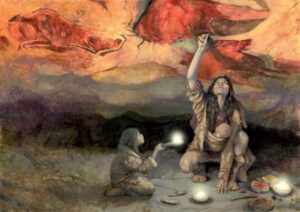
What is Prehistoric Painting?
Prehistoric painting refers to pictorial manifestations created by early human groups during the Paleolithic, Mesolithic, and Neolithic periods. Usually located in deep caves or open-air shelters, these works were made using natural pigments —such as iron oxides, charcoal, clays, or animal fats— applied with fingers, rudimentary brushes, blown through reeds, or even with stencils.
More than simple drawings, these paintings reveal a deep capacity for observation and a symbolic intention that still sparks questions and interpretations today.
Characteristics of Prehistoric Painting
-
Predominantly animal themes: Bison, deer, horses, mammoths, bulls, and goats dominate many compositions, especially in the Paleolithic. They are believed to have symbolic value related to hunting or the spiritual world.
-
Occasional human figures: Schematic human forms, hunting, fighting, or ritual scenes appear, though less frequently.
-
Impressive techniques: Use of the rock’s natural relief to give volume to figures, intentional overlapping of images, precise application of colors.
-
Basic yet expressive colors: Red (iron oxide), black (charcoal), ochre, white (chalk or ash), and earthy tones, all derived from natural sources.
-
Deep and symbolic locations: Many paintings are in hard-to-reach areas, suggesting a ritual or spiritual purpose rather than decorative intent.
Functions of Prehistoric Painting
-
Magical or propitiatory rites: Depicting animals to ensure hunting success or control the spirit of the prey.
-
Symbolic communication: Convey visual information among group members or generations.
-
Spiritual or religious expression: Cave depth and chosen motifs suggest a sacred character.
-
Didactic or narrative: Teach about animals, their behavior, or group customs.
Notable Examples
-
Altamira Cave (Spain): Known as the “Sistine Chapel of Rock Art,” featuring polychrome bison of remarkable realism.
-
Lascaux Caves (France): Hundreds of animal figures, abstract symbols, and complex scenes.
-
Chauvet Cave (France): Contains some of the oldest known paintings, over 30,000 years old.
-
Castillo and El Pendo Caves (Spain): Famous for negative handprints, dots, and abstract symbols.
Cultural and Artistic Importance
Prehistoric painting is the origin of art as we know it. It demonstrates that, from the earliest times, humans have needed to express themselves, depict the invisible, and tell stories through images. These works reflect creativity, intelligence, and sensitivity, connecting us to one of the most human aspects of our species: the desire to interpret and share the world visually.
The Legacy of the First Artists
Today, prehistoric paintings continue to fascinate archaeologists, artists, and visitors alike. They are displayed in museums and interpretation centers, and many have been reproduced for preservation.
Prehistoric art reminds us that the impulse to create has always been part of what it means to be human: the painted hands in caves, the animals that seem to move, the mysterious symbols — all of it constitutes a visual heritage that continues to move and inspire us thousands of years later.